
Blog
What Legally Counts as a Bedroom in New Zealand?
24 Jul 2026
What legally makes a room a bedroom in New Zealand? We explain the minimum size, width, ceiling height, natural light and ventilation requirements—and why council-approved use matters when selling your home.
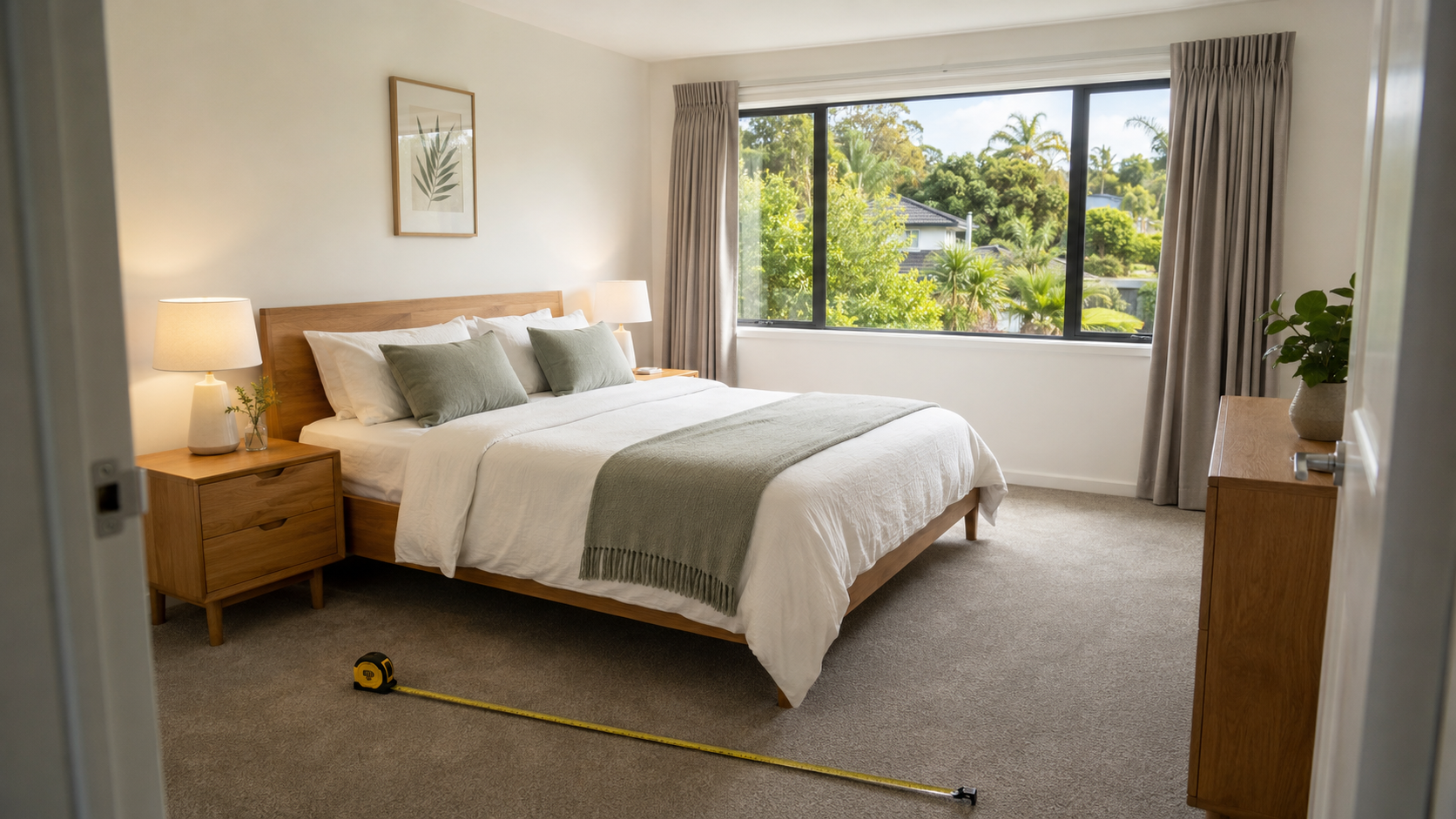
What Legally Counts as a Bedroom in New Zealand?
Many homeowners and buyers wonder what the legal definition of a bedroom actually is.
Does it need a wardrobe? Is putting a bed in the room enough? Can a study, rumpus room or converted garage be advertised as an extra bedroom?
The short answer is that there is no single feature that automatically makes a room a bedroom. Under New Zealand’s Housing Improvement Regulations, a bedroom is considered a habitable room and must meet minimum standards relating to its size, width, ceiling height, natural light and ventilation.
The basic bedroom requirements
Under the Housing Improvement Regulations 1947, a bedroom generally requires:
A minimum floor area of 6 square metres.
A minimum width of 1.8 metres.
A qualifying ceiling height—generally 2.1 metres for an “existing house” as defined by the regulations and 2.4 metres for a “new house”.
One or more windows in an external wall.
Total window glass equal to at least 10% of the room’s floor area.
Openable window area equal to at least 5% of the floor area.
No cooking appliance within the bedroom.
Where a room has a sloping ceiling, areas below 1.5 metres high do not count towards its qualifying width or floor area.
Does a bedroom legally need a wardrobe?
No. A built-in wardrobe is not listed as a legal requirement.
A wardrobe can make the room more practical and attractive to buyers, but not having one does not automatically prevent the room from being a bedroom.
What about a very small bedroom?
There is a narrow exception for an “existing house”, which the regulations define as a house erected before the regulations were enacted in 1947.
In one of these older homes, a room between 4.5 and 6 square metres may be occupied as a bedroom by a child under 10. A room below 4.5 square metres cannot be occupied as a bedroom under these regulations.
Size alone does not settle the question
This is where things can become confusing—particularly when a study, rumpus room, basement or garage has been converted into sleeping accommodation.
A room might be large enough and have a window but still raise compliance questions if it was not constructed or approved as habitable space.
Before marketing a converted space as a bedroom, it is sensible to check:
The council property file and approved plans.
Any building consents and Code Compliance Certificates.
Whether the alterations were completed lawfully.
Whether the space meets the Building Code requirements relevant to the work.
Tenancy Services also advises that bedrooms should be at least 6 square metres, have adequate light and ventilation, and should not be advertised as bedrooms if they do not meet the applicable regulations.
Can you call it a bedroom when selling?
If the room meets the physical requirements and has been lawfully established as habitable space, it may be reasonable to market it as a bedroom.
However, if the council plans show it as a garage, storage room or other non-habitable area, further investigation may be needed before calling it one.
This matters because bedroom count can influence buyer expectations, lending, insurance, valuation and the eventual sale price. Clear disclosure at the beginning is far better than creating uncertainty during a buyer’s due diligence.
If you are preparing a North Shore property for sale and are unsure whether a room should be marketed as a bedroom, study, rumpus or utility room, I can help you review the available property information and decide on the clearest way to present it.
Drew Miller
Ray White Mairangi Bay & Milford
021 963 654
This article provides general information only and is not legal or building advice. Requirements can depend on the property’s age, the work completed and the applicable approvals. For a definitive assessment, contact the relevant council, a suitably qualified building professional or your lawyer.
Next step
Want a local market read?
Get a clear appraisal and recent sales around your address.